

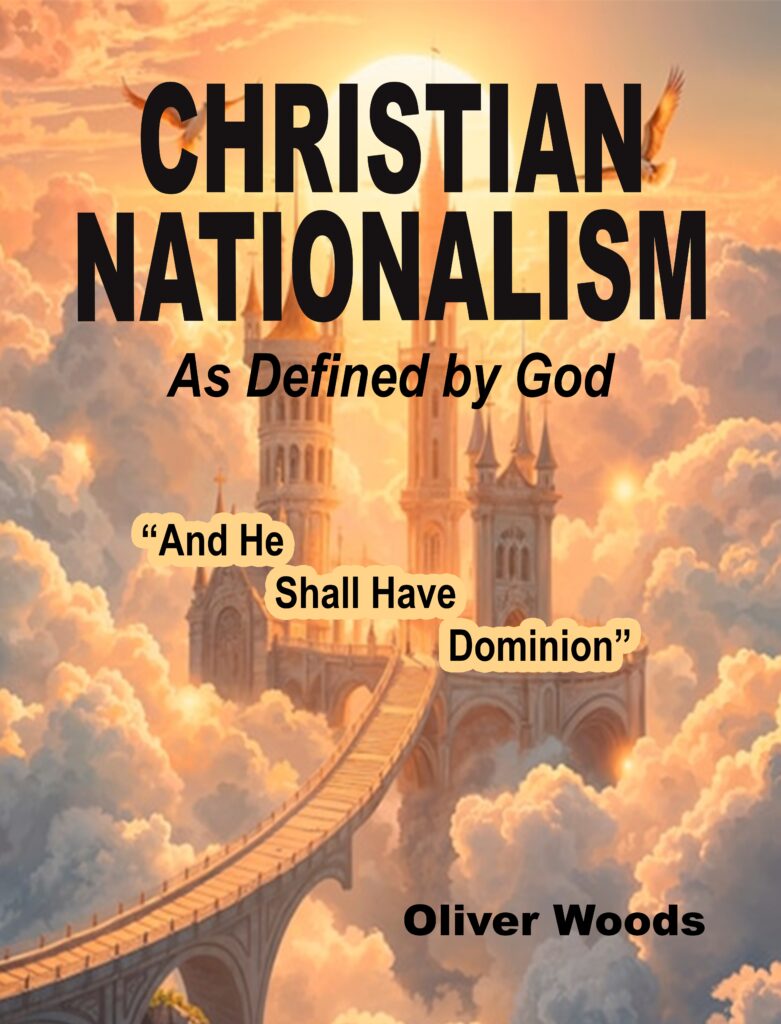
Christian Nationalism as Defined by God by Oliver Woods
- E-Book: $2.99
- Soft Cover: $9.99
- Hard Cover: 19.99
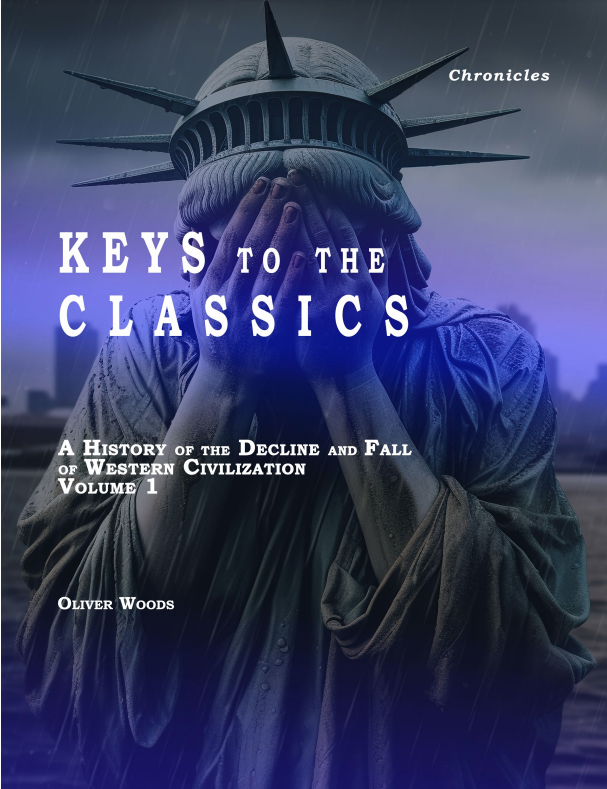
Keys to the Classics – Chronicles by Oliver Woods
- What is God’s great controversy with America and the world?
- Bible analysis of 50 classical authors the key to world history
- Why everything you learned about American history is wrong
- The One Great Law of History – Why we never fail to break it
- The pivotal point the West was derailed and how to reverse it
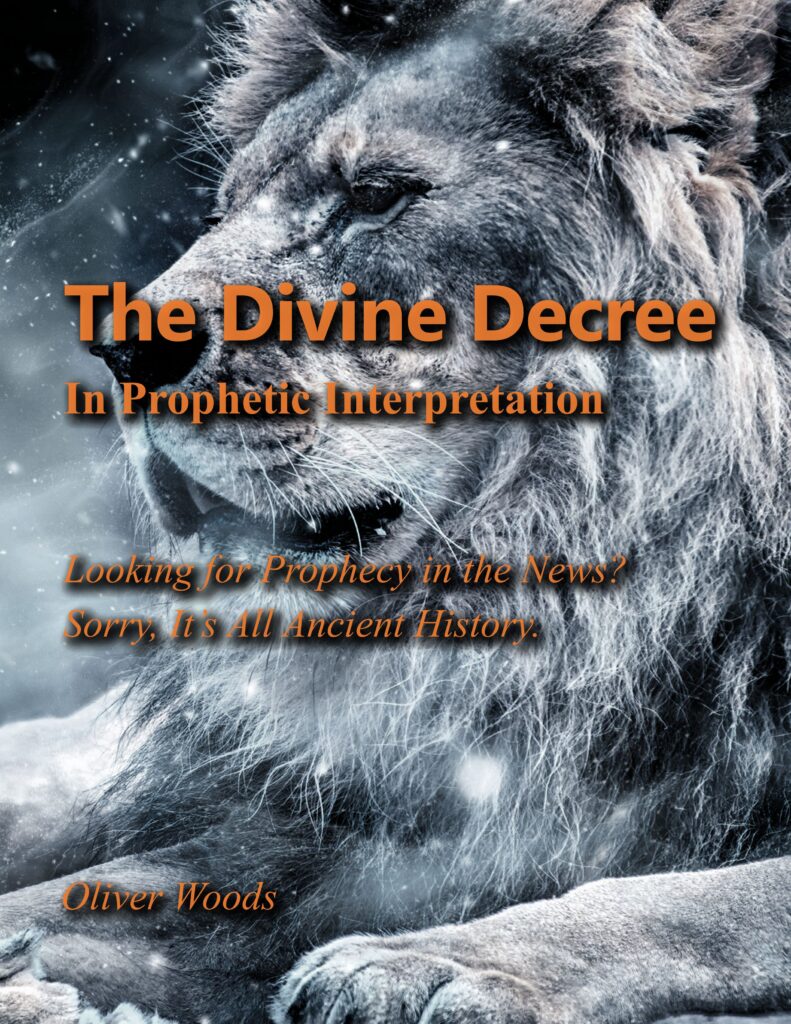
The Divine Decree by Oliver Woods
- Prophecy made easy – I mean really easy.
- Virtually everything you’ve been taught about Bible prophecy is wrong.
- Divine healing from the frenzy of “Rapture Fever.”
- Problem passages you never understood become crystal clear.
- Amaze your friends when you reveal exact year of the Great Tribulation.
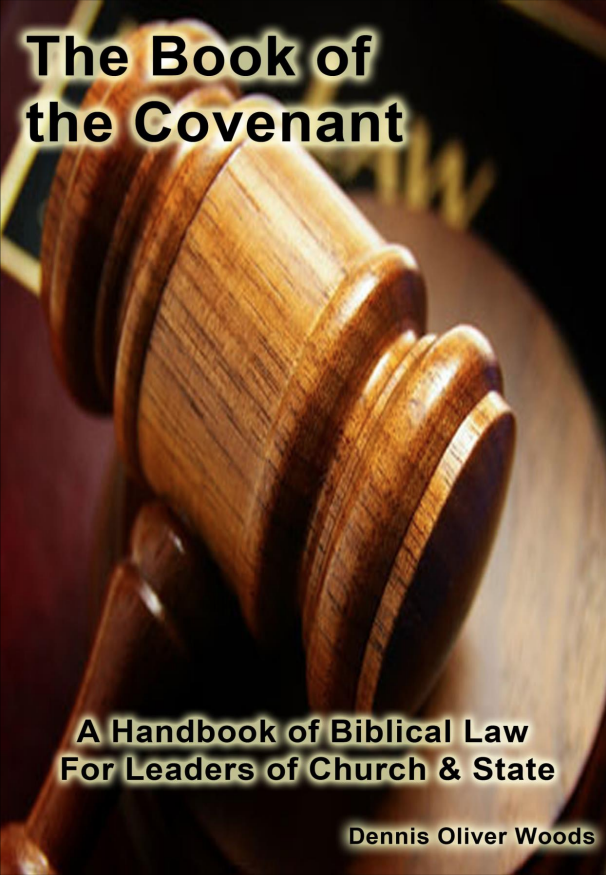
The Book of the Covenant by Oliver Woods
- Radical national judgment demands a fresh look at the foundations.
- Compares the U.S. Constitution with the Mosaic Constitution.
- Your Bible worldview will never be the same again.
- Calls for return to the original intent of the Bible.
- Examines the Ten Philosophical Roots of the U.S. Constitution.
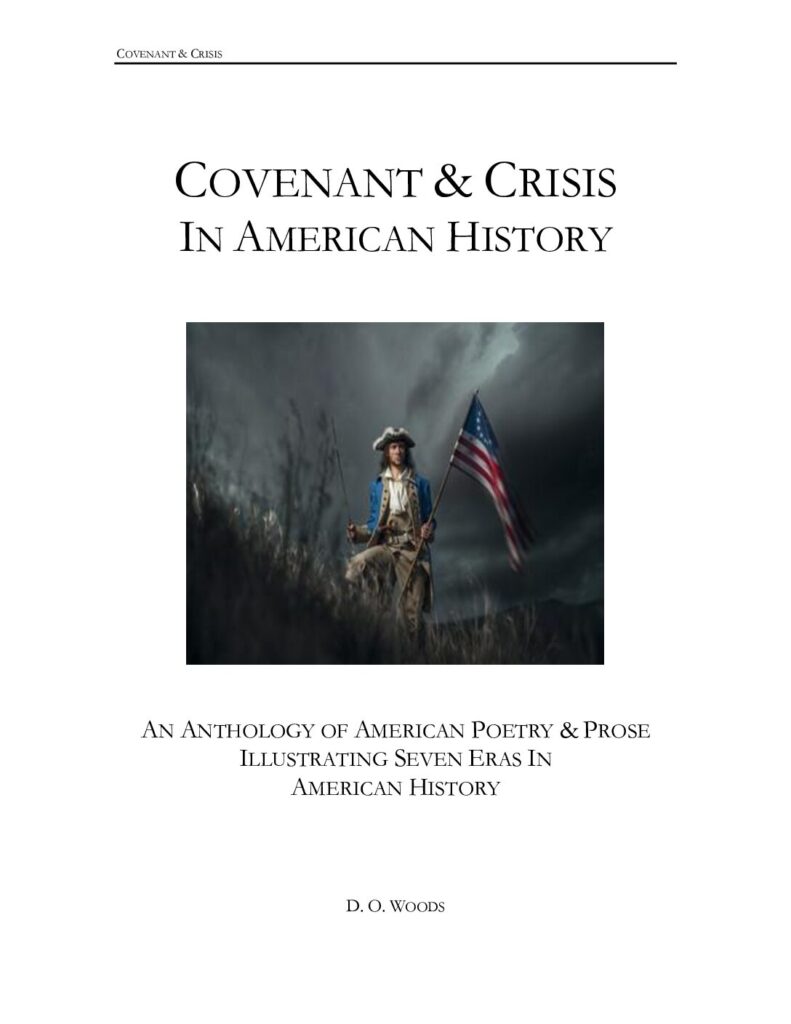
Covenant and Crisis in American History by Oliver Woods
- For those who want the inside scoop on American history.
- When and why did America get off track?
- Companion to “Discipling the Nations’s” focus on American government.
- 7 eras of American history explained by period poetry and prose.
- Learn the critical difference between a Bible covenant and a Social Contract.
-
What Caused the New York Burned Over District?
ABSTRACT: Emotional crusade evangelism in the Burned Over District destroyed the American Dream by replacing New England’s original covenant to govern by God’s law, with an exclusively personal conversion. This led to single issue social crusades at the expense of cultural reformation. It created a spirit of ultraistic willingness to do battle with a multitude of social problems, such as temperance, slavery as sin, feminism, and utopian socialist experiments. That often led to various cults, Mormonism, Millerism, and Premillennialism, instead of institutional reconstruction based on the law of God. We must understand this in order to know what God is expecting
-
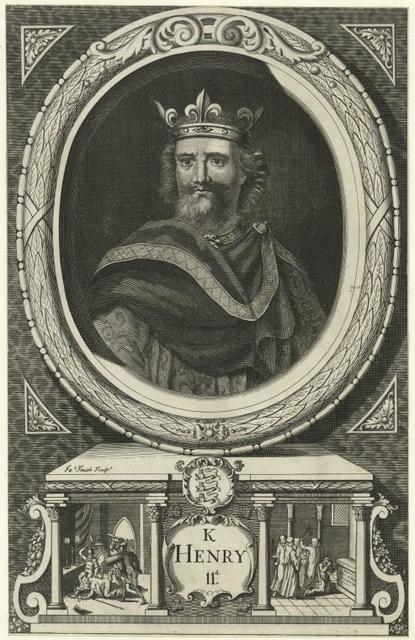
What is the significance of Henry II being called the Father of the English Common Law of Nations?
ABSTRACT: Most naive Christians believe that the Common Law of Nations is based on the Bible. But alas, it turns out this is a myth that leads to endless confusion about God’s requirement for a nation’s law code. As fate would have it, Henry II, the Father of the Common Law, had little interest in Bible law beyond what authority it gave him over the church. He was touchy about that. This was a church ruled by his former friend, Archbishop Thomas Beckett. But no matter, Henry had him brutally murdered anyway. On the doorstep of the sanctuary, no less. Just
-
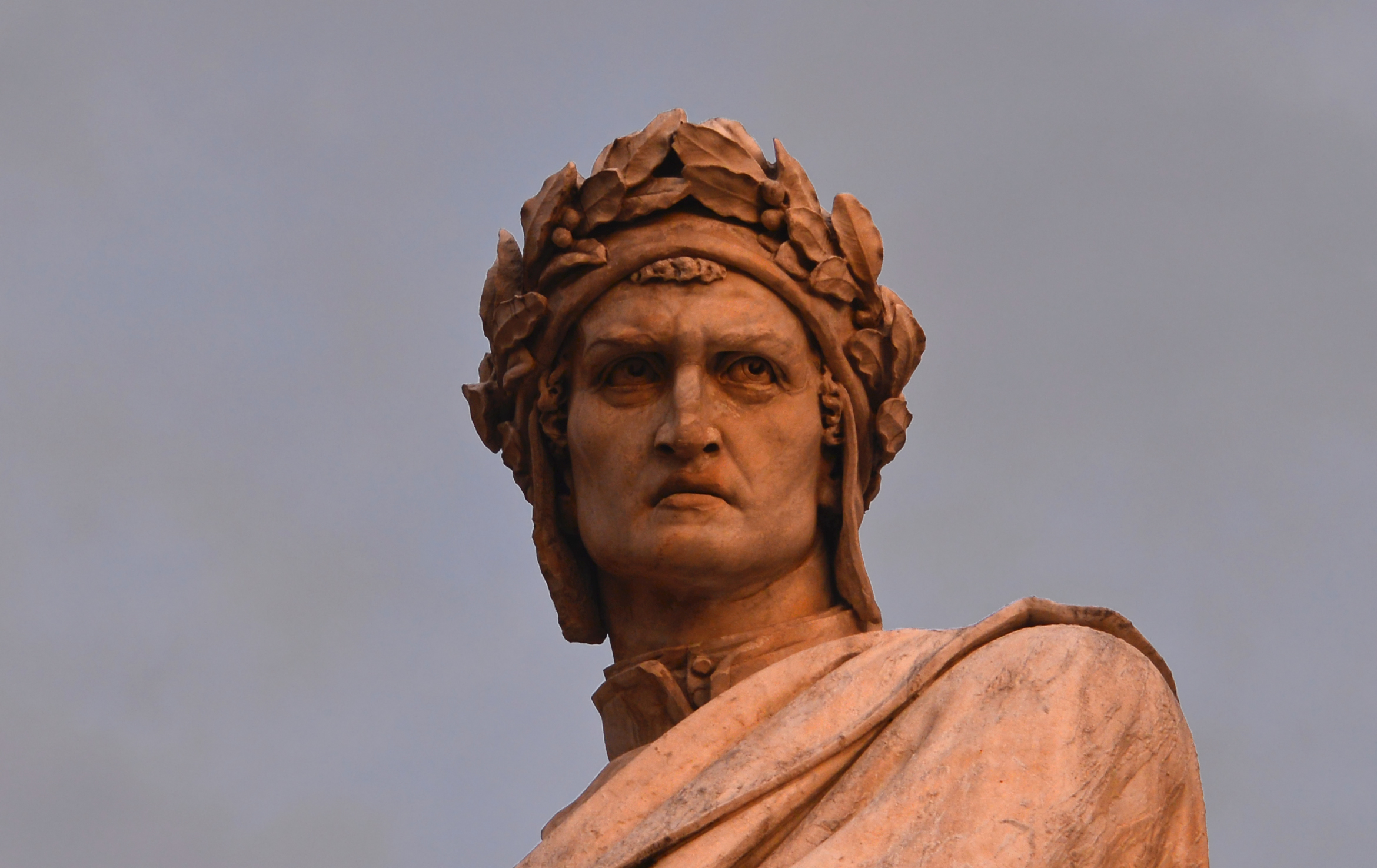
How Did Dante Alighieri Contribute to the Problem of the One and the Many?
ABSTRACT: The One and the Many is the ultimate philosophical problem addressed by Dante Alighieri in the Divine Comedy and his less well known, De Monarchia. The essential problem is how to balance the need for a unitary government (the one) to maintain order in society, with the need for its citizens (the many) to interact freely in their common culture. Dante resolves the philosophical problem of “the one and the many” in favor of the one. He makes Augustus Caesar the exemplar in Divine Comedy and Holy Roman Emperor, Henry VII of Luxemburg his modern counterpart in De Monarchia. Political
-
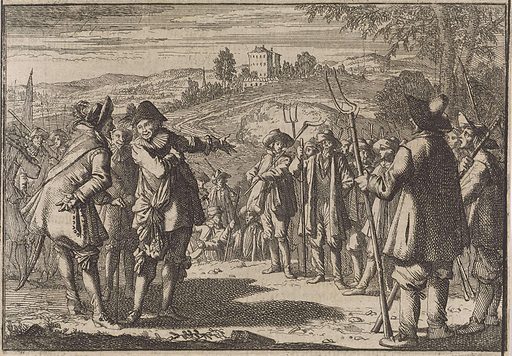
What Were the Differences Between the English Revolution and the Glorious Revolution?
ABSTRACT: Both the English Revolution and the Glorious Revolution opposed divine right of kings tyranny. They were fought against the 4 kings of the Stuart dynasty in the 17th Century. Taken together they are sometimes referred to as Phase I and Phase II of the English Revolution. James I had been tutored from boyhood by Puritan George Buchanan and assumed the throne in 1603 at the death of Elizabeth I. James rejected his Puritan upbringing to rule as a profligate tyrant and was succeeded by his son Charles I in 1625. Execution of a King Charles married a Catholic Queen and
-
What Were the Major Philosophical Ideas of the Renaissance?
ABSTRACT: The Renaissance was supposedly a return to a more enlightened age of Greek and Roman classical humanism following 1000 years of darkness in the Christian Middle Ages. The precursor is “The 12th Century Renaissance” that emerged from the Papal Revolution of 1075 to 1122. The ideas of the Renaissance were based on analysis of Roman law using Greek logic in the universities, emergence of towns, and construction of monumental churches in the Gothic style. The church achieved independence from the state to appoint its own Bishops. But the state began to develop its own secular law codes in a retributionary
-
How Did the Great Awakening Affect Social and Political Life in Colonial America?
ABSTRACT: The crusade evangelism of Jonathan Edwards was the prime mover in the 1st Great Awakening. His preaching focused on an emotional, personal relationship with God via salvation of the soul but virtually no effect on cultural institutions. In fact, his open-air meetings outside city limits tended to break down respect for local institutions and church authorities, and erase the idea of citizenship in a united Christendom. The standard of biblical law for both individual and political life was ignored, which caused many to fall away after a short time. Thus, the Great Commission of Christ to disciple nations or cultures
-
What Were the Main Beliefs of the American Puritans?
ABSTRACT: This article explores a vital question related to American origins: “What Were the Main Beliefs of the American Puritans?” The answer will explain how The Shining City Set On a Hill Declined so quickly from its lofty goals by the second and third generations. And more importantly, how may we avoid such a fate in the future? Puritan society was established on the foundation of a Biblical covenant in which every church member swore allegiance to obey the Word of God in personal, family, church, and civil government. Unbelieving strangers could be part of the community, but could not participate
-
How Did Neoplatonism Influence St. Augustines Philosophy?
ABSTRACT: St. Augustine lived from 354 to 430 a. d. He died after the Sack of Rome in 410 a.d. and before the fall of the Roman empire in 476 a. d. He adopted Neo-Platonism in his defense of the faith, due to its similarities between God and the One, Jesus as the Neus, and so on down the great chain of being. The Great Chain of Being made no distinction between God and His creation. In Augustines philosophy the material world is viewed as evil. Thus, man must strive by asceticism and mysticism to rise on the chain of being
-
The Divine Decree by Oliver Woods
Original price was: $29.99.$17.99Current price is: $17.99. -
The Book of the Covenant by Oliver Woods
$23.99 -
Keys to the Classics – Chronicles by Oliver Woods
Original price was: $29.99.$19.99Current price is: $19.99. -
Covenant and Crisis in American History by Oliver Woods
$23.99 -
Christian Nationalism as Defined by God by Oliver Woods
$19.99